The Science of Sentiment Analysis: How ModMed Uses AI to Read Urgency
Enabling AI to read the room
Managing patient messages just got smarter with the ModMedⓇ Front Office Assistant. Embedded within the ModMed Patient Engagement solution, the AI-driven tool helps intelligently route inquiries and clear inbox noise so your staff can prioritize what matters most.
For most of us with an inbox, notification bubbles are something that we put off checking until it’s convenient. But for busy front office staff, not all bubbles are created equal. The notification that pops up could be a routine request for a parking pass — or it could be a patient reporting severe post-operative bleeding.
Humans know the difference in importance and urgency between these two messages, but the only thing a standard messaging interface concerns itself with is which one arrived first. This is more than just an administrative hurdle; it could affect patient care. When a critical infection report sits buried under five standard refill requests, patient safety could be sidelined by the limitations of basic digital filing.
At ModMed, we’ve found a solution designed to overcome the issues involved with the “first-in, first-out” logic of standard messaging: AI-powered urgency and sentiment detection.
Beyond the chatbot: Engineering intent
While the healthcare market is currently saturated with AI chatbot tools, there is a vast difference between reading text and understanding intent.
ModMed Patient Engagement is designed to do just that with its AI-powered inbox, evaluating incoming messages for signals that indicate:
Intent: Identifying what the patient is trying to achieve, such as scheduling, billing, or asking a medical question
Sentiment: Evaluating the emotional tone of the message to identify distressed or frustrated patients
Urgency: Searching for specific signals, including reported symptoms, distress language, or post-procedure concerns
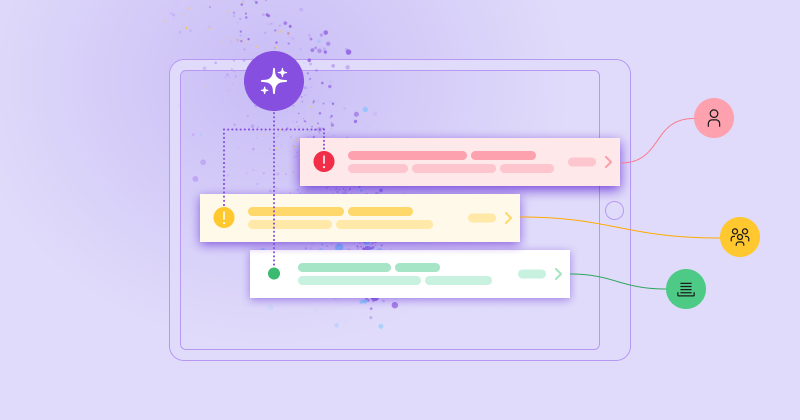
The result addresses our customers’ top priority: helping them identify critical messages faster. With ModMed Patient Engagement, messages flagged with high clinical urgency or distressed sentiment are promptly surfaced to the top of the inbox. Meanwhile, simple administrative tasks — like prescription refills or scheduling questions — are routed to the appropriate staff inboxes with priority labeling.
This helps practices avoid high-risk patient messages getting buried in high-volume data streams. By empowering practices to accelerate response times for the most critical cases while maintaining a steady flow for routine tasks, we help enable a more efficient communication workflow for the entire practice.
Data-driven reliability in a high-volume world
It is important to be clear about the mechanics: Our urgency model functions as a technical evaluator of data streams, not a medical provider.
It does not provide medical advice or replace clinical judgment. Instead, it analyzes the severity and context of incoming messages to help organize the inbox and allow practices to make more informed decisions about which conversations are the most important and should be reviewed first.
By serving as this digital sorting layer, ModMed’s AI Patient Engagement model is designed to give practice staff greater visibility to high-risk patient messages and help keep high-risk messages from being buried in the inbox. This helps enable your team to respond faster and maintain a more predictable communication workflow across the entire practice.
The AI-Powered Practice™ — and your Front Office Assistant — are here
By integrating sophisticated sentiment and urgency analysis, the Front Office Assistant can transform a flat list of messages into a dynamic, prioritized efficiency tool. The benefits include:
Supported patient care: Critical patient-reported signals – like post-operative complications or acute pain — may be surfaced more quickly, helping reduce the likelihood that urgent needs become buried under routine requests
Operational efficiency: By efficiently categorizing administrative tasks like billing and scheduling, your team can route workflows to the right staff members without manual sorting
Reduced provider burnout: When the “noise” of a high-volume inbox is filtered through an intelligent triage layer, staff can focus on high-impact patient care rather than administrative work
Ultimately, this isn’t about replacing human judgment; it’s about providing your team with the clarity they need to exercise that judgment and take action when it matters most.
New intelligent features for ModMed Front Office Assistant are on the way to help streamline your front-office workflow.
This blog is intended for informational purposes only and does not constitute legal or medical advice. Please consult with your legal counsel and other qualified advisors to ensure compliance with applicable laws, regulations, and standards.
ModMed EHR does not take the place of licensed healthcare professionals and medical coders. Users and medical practices are responsible for final decisions on how to bill and code.
This page includes “forward-looking statements,” including information about solutions and features that are not yet available. The decision and timing regarding release and development of solutions and features may be subject to change. Actual solutions and features may differ materially from any of those expressed here or in other forward-looking statements. Any purchasing decisions made by you should be solely based on ModMed’s existing solutions and functionality.