


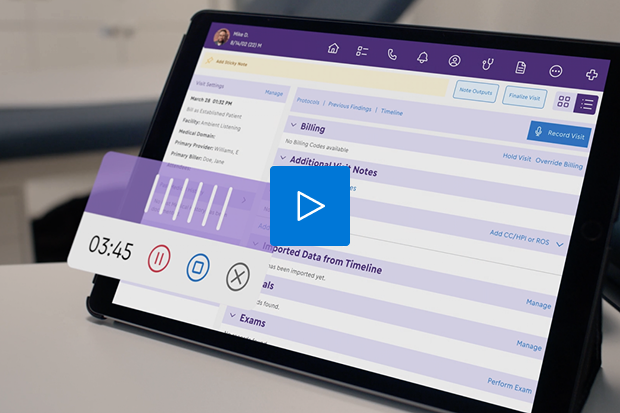



Enjoy the webinar!
Recorded on January 28, 2026.
Hello everyone, and thank you for your patience there waiting for us to get started. Thank you all for joining today's webinar. Before we get started, I would like to share some housekeeping items with all of you. The first is that we will be having a live Q and A session at the end of today's webinar. So at any time during today's webinar, if you have any questions, feel free to submit them under the Q and A tab on your screen. Please make sure to submit them under that Q and A and not the chat, because our speakers will be able to see your questions that you submit under the Q and A tab. So just a reminder there for everybody. We also have a couple of polling questions that we would love to have your participation on during today's webinar. And then also we have some complimentary resources for you today and you can find those under the Docs tab on the right side of your screen where you see the Q and A tab, there's also a Docs tab and you can look there for the complimentary resources. Before we get started with today's webinar, there is a legal disclaimer that I need to share with all of you. And that disclaimer says, the materials and other information included in the following presentation are provided as of the date of this session on January twenty eighth two thousand twenty six unless specifically noted and may be subject to change. ModMed has no obligation to provide updates to the information provided. Modmed and the presenters make no warranty regarding the accuracy or completeness of the information provided. This presentation includes forward looking statements, including information about solutions and features that are not yet available. The decision and timing regarding release and development of solutions and features may be subject to change. Actual solutions and features may differ materially from any of those expressed in this presentation or other forward looking statements. Any purchasing decisions made by you should be solely based on MonMed's existing solutions and functionality. This presentation is intended for informational purposes only and does not constitute financial, legal, medical or consulting advice. Please consult with legal counsel or other qualified advisor to ensure compliance with applicable laws, regulations, and standards. A portion of the views expressed in this presentation are those of Kristen O'Brien and Deborah Goddess of McDermott Plus and not of Modernizing Medicine Inc. So with that, the topic of today's webinar is twenty twenty six Medicare series part one, deconstructing physician fee schedule changes. And now I will turn the webinar over to our host and first speaker, Doctor. Michael Schirling. Thank you so much. Welcome, everybody. Thanks for joining us today. I'm your host, Michael Schirling, the Chief Medical Strategy Officer and co founder of ModMed. Also, pleased to introduce an amazing group of panelists. We've got Kristen O'Brien from McDermott Plus. Aida Montashi, our own AVP of software regulatory compliance at ModMed. We've got Deborah Goddess, a principal at McDermott Plus. Rhonda Tuz, our senior director of billing and coding compliance at ModMed. And we've got Ali Kabashki, our senior solutions consultant at ModMed. Alright. So we've got a packed agenda. Kristen will start off giving us a broad picture of where physician Medicare reimbursement is going in twenty twenty six. We'll then cover quality reporting updates, and Ida will outline how to report quality initiatives through ModMed. Deborah and Rhonda will cover new Medicare codes and telehealth updates. Kristen will then give us some updates on AI regulatory, and then Ali will do some amazing Scribe demos, so please do stay for that. And then at the end, we will cover some live Q and A, as we always do, on the topics you're interested and the questions you have. If you do have questions, there should be a questions tab that's available. If you just type your questions during the webinar, we will get to them at the end. And with that, I'll have Kristen tell us more about physician Medicare reimbursement. Kristen? Thank you so much, Shockley Shirling. Hi, everyone. So I'm Kristin O'Reina. I'm a principal with McDermott Plus, and we're going to dive into the twenty twenty six updates for physician fee schedule, both on the payment side and the quality side. Next slide. So, starting with the reimbursement, this year is a very interesting year, and we're going to go over that in a number of details. One, that twenty twenty six generally has a positive update, but the over lasting impact of that update is put into question basically because they do adjust the fee schedule and the way Medicare typically reimburses physicians by adopting two new policies. And we'll go into that in a lot of detail because I think that puts us into a lot of questions about what reimbursement will look like in the future past twenty twenty six for physicians that participate in Medicare. Next slide. So, this was the first physician fee schedule under the second Trump administration. And as expected, they really did use different levers than we've seen in the past. There's been some scrutiny of how physician payment has been updated, the lack of robust data, and even just some questions about the American Medical Association's coding and ROC process to value services. A result of that, the final regulation includes a significant two significant changes. One is called an efficiency adjustment, and the second has to do with practice expense, which really creates differentials for facility versus non facility positions. Next slide. But starting with the good news, at first glance, the news looks very positive for twenty twenty six. CMS finalized actually a positive conversion factor, and that is rare because typically what happens is the physician fee schedule comes out, Congress recognizes there is a cut to the fee schedule, and then works to adopt a patch sometimes that fully covers the cut or at least mitigates the cut to some extent. But this time, it's a bit different. Congress acted proactively and provided a two point five percent boost in the One Big Beautiful Bill Act. And so as a result, for the first time in a number of years, we actually see a positive conversion factor. And the conversion factor, remember, is really the driver that is used to assess what the overall payment rate is compared to twenty twenty five. We'll still have to look at the specialty impacts, But in general, this is showing us that we are seeing a three point eight increase for physicians that participate in qualified payments or advanced payment models. And those that do not participate in those type of programs will see a three point three percent increase. Either way, is significantly larger than what the conversion factor update is typically. We will caution that this is a one time patch. Congress provided this in advance at two point five statutory boost, and that is not guaranteed in future years. And as a result, we're still cautioning that the overall conversion factor for future years is still present. The constraints are still there. There has been no actual structural fix to the fee schedule that will result in positive updates in the future. So positive news for twenty twenty six that this is the first time in six years to see a positive conversion factor, but just foreshadowing ahead that there are still challenges, especially in future years for physician payment. Next slide. And so what we wanted to sort of break down in a lot more detail for everyone today is that while the conversion factor is positive, the actual specialty impact may not be. And that results in if you have to look at all the different sort of factors that go into physician pay, it really differs across different specialties. So, in this chart, it's a little bit confusing because this does not include the conversion factor update. But what it does show is if you look at all the policies in the fee schedule without the conversion factor update, is it trending positive or is it trending negative? And you'll see that there's really wide variation depending on your specialty. So for individuals in dermatology, in plastic surgery, even in OBGYN, it's overall negative. What this means is that had there not been that conversion factor positive update, you would have seen significant declines in your overall Medicare fee for service payment. On the other side of the coin, allergy, immunology, interventional pain medicine, and some of these other specialties will see more positive updates. We're going to explain sort of why the differential is so great this year, and that it will likely trend like this again in future years. Next slide. So, the first adjustment that I wanted to talk about that was adopted in this twenty twenty six final regulation was a new change to how they allocate practice expense. And what the policy really does is it generally says those individuals that work in facilities will likely see a significant decrease in their indirect practice expense. And that is just a component of your payment, but it can be a significant portion of your overall Medicare fee for service payment rate. In contrast, those in primary care and office based settings and other clinicians that are in non facilities, they will likely see an increase in their payments. This is basically CMS saying that they believe that certain facility settings no longer have significant indirect practice expense costs. They think they are more borne by the hospital and not actually individual physicians. And so, a result, CMS in this regulations cuts that portion tied to practice extent by over fifty percent. And this is resulting in just really significant shifts from different specialties. So the total specialty impact from justice policy alone is negative six percent for certain facility based physicians versus those in facility based, non facility based are seeing plus seven percent in total reimbursement just due to this one policy. It was primarily focused on this idea that we continue to support primary care in office based settings and wanted to deemphasize sort of the amount they were paying clinicians that have chosen to move into hospitals, ASC, and other facility based areas. Next slide. The second major change to how physician payment works is what's called the new efficiency adjustment. CMS noted that over time, they just expect certain procedures to become more efficient. Physicians likely will understand and know how to do the procedure more routinely, will have efficiencies created by that volume, and shouldn't just have a constant payment amount. They created an overall decrease to account for this new efficiency. And overall, it's a two point five percent decrease in the work RVUs. So again, overall, impacts and decreases certain entities that do a lot of proceduralist practices. This affects nearly seven thousand physician services or ninety one percent services provided by physicians. So think of your typical surgical procedures, things that are diagnostic specialties are also significantly impacted by this. And it's based on a five year look back. So CMS is basically saying, since these codes haven't been updated in over five years, we're going to reduce the overall work efficiency. And this leads to a cut to a number of these codes. Next slide. So, what does this all mean? We're trying to sort of give you the high level takeaway. Essentially, what it means is for twenty twenty six, you get a positive input because of the conversion factor patch. That conversion factor, at least for one year, gets you basically up to where you would be in inflation. But if you look at this more long term, this is where we see erosion again because there is no steady inflationary update in the fee schedule. The overall problems in the fee schedule are still present in future years. So without the inflation adjustments, Medicare physician payments are going to decline over time. That estimate has been between twenty five percent to thirty three percent in real terms since two thousand and one. So even despite the update for twenty twenty six, I think we still see a very challenging Medicare physician fee schedule payment environment for physicians. And again, there's just even more challenges of how they will adopt the efficiency adjustment and the change in practice expense moving forward. But all of that trends negative unless there is more structural reform to the fee schedule, such as including an inflationary adjustment, addressing budget neutrality, or even fixing the two new adjustments that they added to this fee schedule being the efficiency adjustment or practice expense. Next slide. So that's our overview of payment. I think the sum result is twenty twenty six is going to be a challenging year, but we hope that future years will have different reforms as well. Now we're going to switch over to the quality reporting update for twenty twenty six. And this is mainly still the MIPS program. And it has a little bit of a different flavor than the payment side. While we saw significant changes in physician payment, the quality reporting side is holding fairly steady. Next slide. So, I think everyone at this point is familiar with MIPS, but just a quick refresher. The program has different categories: quality, cost, improvement activities and promoting interoperability. They are all weighted based on statute. These weights have not changed. Thirty percent for quality, thirty percent for costs, fifteen percent for improvement activities, and then twenty five percent for promoting interoperability. You have to meet a threshold in order to avoid a penalty above the threshold you earn an incentive. Next slide. So, are the changes in this year's regulations? I think the good news is they've heard that clinicians have been challenged by MIPS, that trying to make the threshold more difficult each year was really resulting in very few physicians being able to positively perform under MIPS. And recognizing that this year CMS says we won't change the threshold. So that will remain steady, not even for one year, but for over a couple year period. They're going to keep that seventy five points in order to earn a neutral score within MIPS. Anything below that would be a penalty. Above that, you would earn an incentive. But this is the same as last year, and they're recognizing basically they don't want to increase or make the program at least more challenging over time. They're going to hold it steady, hopefully for some stability for physicians. But obviously, you still need to achieve those seventy five points to do well in MIPS. Next slide. And then again, I think the dilemma for MIPS continues. What we've seen is that despite the effort and the significant reporting burden that goes into it, the overall incentive is fairly low. So, most clinicians, even if you are earning a median score or even earning above that in the eighty points area, you're only receiving at maximum one percent to two percent increase on your overall physician fee schedule payments. So, that's still something. It's still obviously important to be able to say you're improving in quality, but you're certainly not seeing the huge sort of bonus payments that I think some people believed MIPS was intended to do. Incentives are a little bit flat, and you really need to perform exceedingly well to get over a one to two percent increase on your physician payments. Next slide. The other significant effort that continues and has not gone away is the effort by CMS to sort of change the MIPS program. They've heard frustration with it, and they're going to continue to try out what is known as the MIPS Value Pathway or MVP reporting. There's still no deadline of when they intend to completely shift away from the MIPS program, but they continue to introduce new MVP pathways. They continue to say that creating these pathways they believe is better for specialists who want quality measures that are more tailored to the care they provide to their patients. And overall, MVPs is sort of the direction that CMS continues to march, saying this is the way we want quality reporting to move in the future. Next slide. So comparing MIPS to MVPs, it's important to note that it's not a completely different program. MVPs are based on MIPS. They still have sort of the same structural components, and therefore, it's just a bit of an adjustment when you're moving outside of MIPS to try to report MVPs. They select the quality measures that you need to report in MVPs, and it's a much narrower range of quality measures. You're scored on fewer measures, though. They're reducing some of the reporting burden. But they also add sort of a population based quality measure that they want you to be able to report upon. And overarching, the goals are very similar to MIPS. It still requires you to leverage quality measures to perform on those quality measures and then still have the other components of MIPS in general. So, it's just MIPS sort of turned over to focus more on certain specialties, care pathways. Next slide. And now I'm going to turn it over to Ida to talk about the MVPs in a little bit more detail, especially how MonMed incorporates it into its registry. Thank you so much, Christine. Hi, everyone. Next slide, please. Yeah, so modernizing medicine supports MVP. We heard how important MVPs are. As of right now, ModMed Registry supports four Orto, ENT, ophthalmology, dermatology, and we are planning to add urology and podiatry MVPs for the year twenty twenty six, or this year. Next slide, please. A little comparison between the two programs, you can see a screenshot from our traditional MIPS versus the next tab right next to it in Emma, would show you the MVP program that we support, as you can see, and as Christine mentioned, that there's a lot of similarity between the two programs and MVP is based on traditional MIPS. However, number of the measures you have to report on is less. I also wanted to take this opportunity to remind you that there are some MVPs that they support the measures that are topped out from traditional MIPS, but they still continue to be supported with MVPs. So, that's a little bit of the benefit of using the MVPs. I also wanted to remind you that if you are interested in participating in MVP, you need to register with CMS. Next slide, please. A little bit of the streamlining the quality of reporting. As I mentioned, Modernizing Medicine has its own registry. However, we are in the partnership with two of the large registries that they support almost every single measure. You know, have a lot larger selection. It's HealthMonix and Patient three sixty VR. They are collecting a data through data graph from our system. And in addition to that, there are a number of the specialty specific registry that we support. Aqua, Dataderm, GIQIQ, IRIS, Reg ENT, and Registrate Clearinghouse are the number of the specialty registry that they do support. Next slide, please. I also wanted to take this opportunity to talk about the ECR or electronic case reporting a little bit. It is required for you if you are submitting MIPS and you're planning to report on the PI or promoting interoperability, there is a measure called electronic case reporting that you do require to report on it. However, because the states were not available, it's been suppressed for this year, for twenty twenty five. It will be continued in twenty twenty six. When we say it's suppressed, that means you do need to select one of the options, either yes, no, or exclusion. And if you do not select anything, unfortunately, you're going to get negatively affected. If you're not planning to report MIPS or interoperability, then that doesn't qualify for you. With that, I'm going to turn it to Deborah Goddess to go over telehealth coding and policy updates. Thank you. Thanks, Ida. Good afternoon or morning, depending on your time zone. I'm Deborah Gottes from McDermott Plus. If we want to go to the next slide, I am going to give some telehealth coding and policy updates. Next slide, please. The first piece I wanted to give an update is what's going on with the telehealth services list. As many of you may be aware, as part of the annual rulemaking process, CMS does updates to the telehealth list through a defined process where they are adding codes and services that are eligible for reimbursement as when performed via telehealth, They've distinguished historically as those types of services that they have permanently or provisionally added services to the list. Starting in twenty twenty six, so effective oneonetwenty twenty six, CMS has actually made the decision to eliminate two of the specific criteria that they used for adding codes to the telehealth list. One was whether the service could be performed as well via telehealth as in person, and also if there were comparable services on the telehealth list. With the removal of those two specific criteria for whether to add services to the telehealth list or not, They have eliminated one of the categories, and so essentially you're either added to the telehealth list on a permanent basis or not. Even though they have noted that services that meet the new criteria are added permanently, CMS does acknowledge that they still have the ability to review and subsequently remove codes from the list, even though it has the labeling of permanency. And the reason why the agency made a change to this process, though, is they wanted to remove the administrative burden and to try and make the process a bit more streamlined. Next slide, please. So a couple of other key updates from a telehealth perspective. So first of all, one of the flexibilities that CMS had established, but not on a permanent basis, was the ability to do a virtual presence via audiovideo real time communications versus direct supervision. So instead of requiring the supervising physician to actually be there physically, they would allow them to be considered immediately available if they were doing so through a virtual presence two way, real time audiovisual technology. And this was applicable for diagnostic tests, incident use services, pulmonary rehab, and cardiac and intensive cardiac rehabilitation services, as well as a subset of specific services furnished in the hospital outpatient basis. And based on feedback and considerations from stakeholders, CMS actually decided to make this flexibility of doing direct supervision via virtual permanent, and that's effective oneonetwenty twenty six. The other thing that I would imagine that most of you are curious about is the flexibilities. Right now, the telehealth flexibilities continue through January thirty of twenty twenty six, which is two days from now. Right now, they are part of a health extenders package, which if approved by the Senate, it's gone through the House and it's approved by the Senate, will add two years to the telehealth flexibilities and the ability to pay for services via telehealth, but absent congressional action, those flexibilities do not extend beyond January thirtieth of this week. Next slide, please. Another key major policy update that happened in the physician fee schedule was around skin substitutes, and this has been an area of discussion for the agency for a number of years, both in the physician office and the hospital outpatient setting. As a reminder, historically, substitutes, specifically the products, have been reimbursed on an average sales price, or ASP plus six percent. And CMS has contemplated a number of different ways to address the growth, the unprecedented growth, in the use of skin substitutes. And what they have done is they have made a meaningful change in their payment policy as of oneonetwenty twenty six. Part of the reason why they made these changes is they wanted to have a consistent approach for how they're paying skin substitutes, both in the physician office and the outpatient setting. And they wanted to have a uniform approach across the different products, so not having a delineation among products. So what CMS has finalized for oneonetwenty twenty six is that these skin substitutes are to be treated as incident to supply. So what that means is rather than being paid at average sales price plus six percent, what they have done is they have set a national payment rate of approximately one hundred and twenty seven dollars per centimeter squared for all skin substitutes, and that's regardless of whether your skin substitute was a PMA, five ten ks, or a three sixty one HCTP. So right now what they have done is they have established this as a new payment policy that became effective twenty eight days ago. Another key thing to note if you are in this space specifically is that there were seven LCDs, so it was essentially a de facto national coverage determination on skin substitutes, and those policies were originally finalized last year and then delayed, and they were scheduled to become effective as of oneonetwenty twenty six. And at the end of the year, CMS actually withdrew all of those skin substitute LCDs that were scheduled to become effective. So those LCDs are no longer going to be in place as of oneonetwenty twenty six. Next slide, please. A couple of other updates. One is around remote patient monitoring. This is a service that had codes created initially in the remote physiological monitoring back in twenty nineteen, and remote therapeutic monitoring in twenty twenty two, and they saw unprecedented growth, particularly during COVID. And so what the American Medical Association did is they created new CPT codes, and these new CPT codes were established payment rates under the physician fee schedule for twenty twenty six. And the key types of codes that were created was, number one, they created device codes that would be reportable when patients were being treated or using the device for less than sixteen days. So now there's separate codes for whether the device is being used for sixteen to thirty days in a month versus two to fifteen days in a calendar month. And that's true for both remote physiological monitoring and remote therapeutic monitoring. The other thing that they did is they added new treatment management services. So historically, what it has been is that you were not able to report remote monitoring treatment management services, basically when you were taking the data that you were capturing and analyzing it and reviewing it and modifying how you were treating the patients. You weren't allowed to report those codes if you had less than twenty minutes in a calendar month, but effective oneonetwenty twenty six, they created both for the remote physiological and for the remote therapeutic monitoring services, where as long as you are providing at least ten minutes in a calendar month that you would then be able to report those services. The last update that I want to provide, which is on the next slide, is specifically around the radiation oncology treatment delivery. There have been a number of updates from a CPT perspective and thus from a payment perspective on radiation oncology, specifically around surface radiation therapy and phototherapy. There were a number of codes that had been reported in the nonfacility setting specific G codes, and we've note those as some of the codes that were actually deleted, effective oneonetwenty twenty six. Some of the IMRT, as well as the CT guidance codes, as well as the superficial radiation therapy codes were deleted all, effective oneonetwenty twenty six. They revised a number of codes, seventy seven thousand four hundred two, four zero seven, and four twelve, on how to do radiation, therapy for photon therapy and the levels depending on the type of therapy that's being delivered, and then new codes specifically serve superficial radiation therapy. So there's a lot of coding changes that happened and a number of payment changes that happened as well. So with that, I am going to hand it over to Rhonda. Thank you, Deborah. Good afternoon, everybody. One of the updates that I wanted to give you is in relation to the G2211 code. So some of you may be familiar with this add on code. It's for visit complexity and it must be added on to an EM code. One of the things that I wanted to make sure everybody knew was that, this code was initially implemented January first of 'twenty four, and it was only for office outpatient and place of service. But effective on January first, twenty twenty six, it's also applicable for home or residents E and M visit codes. So let's remember that it's intended to add on to an E and M code and used to describe visits that involve a longitudinal relationship between the physician and patient and visits that do not. So usually you're going to see this being utilized primary care visits where the provider access the patient's main contact and coordinator of their healthcare, or possibly a specialist visit for serious conditions like cancer or chronic liver disease requiring continuous oversight. Also routine follow-up where the provider built a strong trusting relationship between themselves and the patient, not to be used for short term or self limiting conditions where there's really no ongoing relationship established or when complexity is solely due to an acute illness without that longitudinal aspect. So that's good news for the G2211 in the addition of the other EM codes that you can add that onto. I have shared the FAQ link which addresses things like who can bill this. It hasn't been updated with the new home or residence EMs that were included beginning January first of twenty six, but it does contain some good information for you. So with that, I'm going to turn it back over to Kristen who's going to give us some information on AI. Great. Thanks, Rhonda. So, just a quick overview. We can go to the next slide. This administration is really focused on leveraging artificial intelligence. And I think that's definitely something they are looking to in the future to help with some of the administrative burden to move technology more quickly into physician activities as well as healthcare overall. And so, we're going to highlight exactly how this is occurring and also what ModMed can do. Next slide. So, are some of the recent actions on AI? President Trump issued an AI executive order that really focused on moving more of this action into the federal landscape. Rather than having state laws address AI in sort of a fragmented piecemeal way, the executive order seeks to overturn any conflicting state laws and to make more of a landscape at the national level to utilize AI on a large scale. Now, this isn't just limited to healthcare. I think what they're saying is they want more cohesion across AI generally in all different types of sectors. Building on this, there was a request for information asking for ways to accelerate the adoption and use of AI as a part of clinical care. And this is the first time that we've really seen them focusing on asking stakeholders and industry participants ways that AI are used today, ways that AI could be leveraged, and giving them sort of an open forum for information about ways that AI can help sort of the practice of medicine. Those comments are not finalized yet. They are due in February, and interesting to see sort of how stakeholders respond. We've also seen just a lot of interest in the coding and payment views for AI in the future. CMS has established national pricing for new category one CBT code that's effective at the beginning of this year. And we're seeing the American Medical Association also contemplating new code frameworks for services that incorporate algorithms at a broad scale. So, all of this is suggesting that there is a strong movement towards AI. Payment may be changed. Coding may be changed. Those are all still to come. But in the meantime, we are definitely trying to incorporate those services into modernizing medicine. All right, I know we're out of time, and I wanted to make sure that we just get to the next slide. Maybe Yvette, if you want to cover what the next webinar is. Yes, thank you, Doctor. Schirling. So yes, audience, before we let you go, we wanna let you know about our next upcoming webinar. We're actually doing a series for this Medicare topic. The next part two webinar will be on Thursday, April second at twelve pm Eastern Time. Our speakers will be Aida Montashi, who is the speaker today, and Jane Engelking, who's a senior manager of business services here at ModMed. The topic will be twenty twenty six Medicare Series part two, navigating MIPS and major reimbursement changes. So during this webinar, as mentioned, Ida and Jane will be our speakers, and they will walk us through the important changes to MIPS reporting and payment adjustments that may affect your practice in twenty twenty six, and they'll show you some critical updates and how you can navigate those in the coming years. If you're interested in learning more about that webinar and or registering, I'm going to post that information here in the chat for you, so we hope to see many of you at that webinar with us. And with that, we want to thank you for joining us for today's webinar. We hope you found the information insightful, thought provoking, and beneficial, and we wish you a wonderful rest of your day. Thank you so much. Thank you so much.
Tools for Empowering and Connecting With Patients
ModMed Pay

Patient Self-Scheduling

Patient Reminders

APPatient
Patient Portal

Learn how ModMed® helps empower practices and patients
Select a topic from our recorded webinars.