






Specialty practice analytics software for EHR and billing insights
Turn practice data into clearer decisions
What could you do to improve your care?
Is your practice losing money? If so, where?

Analytics includes three report categories:

Administrative Analytics

Visualize and benchmark clinical data at a high level
- Find specific patients to follow up with
- See how referring providers affect your bottom line
- Analyze visit volume trends, plus CPT and ICD-10 code distribution

Provider Analytics
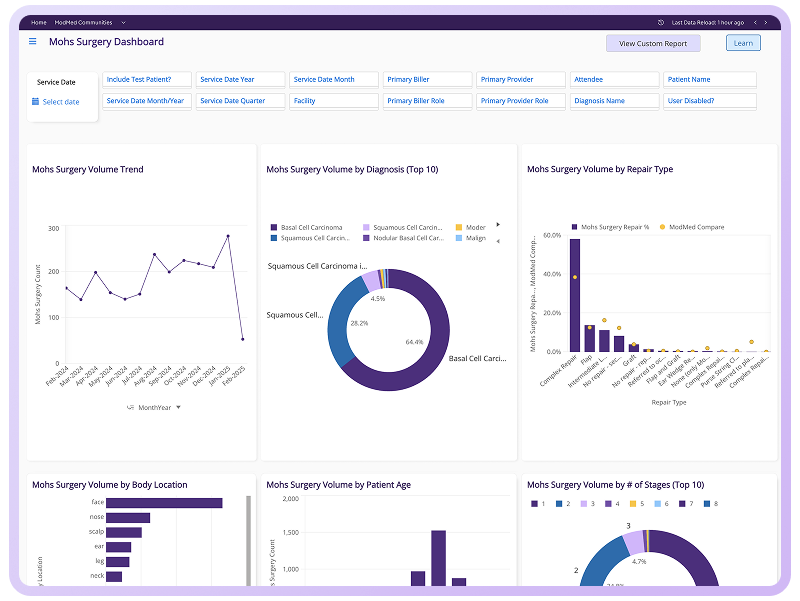
See how you’re performing relative to your specialty peers
- Identify patients lost to follow-up for high-risk diagnoses
- Analyze E&M distribution and outbound referral patterns
- Track and benchmark outcomes

Financial Analytics

If you use Practice Management, dig deep into your billing revenue cycle
- Spot reimbursement trends before they affect cash flow
- View charges, payments and adjustments by payer group
- Track month-over-month changes in A/R


Filtering Capabilities
Filter each report by a wide range of parameters, such as:
- Date
- Provider
- ICD-10 or CPT code
- Facility
- Modifier
- Tax ID
- Treatment plan
- Medication
- Pathology results
- And much more
Augmenting the built-in reports in EMA® and Practice Management, Analytics brings together the clinical, financial and operational data that you collect inside our suite. In just a few clicks, you can drill down from enterprise level to provider level and even patient level.
By tracking, benchmarking and truly understanding your performance with Analytics, you can help uncover ways to improve—efficiency, profitability, patient outcomes and beyond. This, in turn, puts your practice in a better position for long-term success.
Data Explorer
Flexible Data Solutions to Meet Your Practice’s Needs
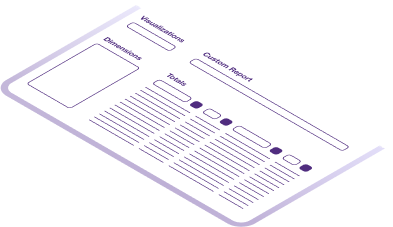
Included with EMA, Data Explorer is a self-service solution that gives you the flexibility to explore raw data, on your own, to answer specific questions. Pre-specified data sets offered with Data Explorer include patient demographics and history, prescribed medications, referral sources, exam details, billable charges and more. With access to your practice’s data, you can build reports with multiple dimensions and export them for further manipulation and analysis.
FAQs
What are the four types of analytics in healthcare?
In the healthcare industry, data analytics is generally categorized into four progressive stages that help practices move from understanding the past to predicting the future:
- Descriptive analytics: The most common form, which uses historical data to answer what happened (e.g., monthly patient volume or revenue totals).
- Diagnostic analytics: This takes a deeper dive to answer why did it happen by identifying patterns and anomalies (e.g., investigating why a specific payer’s denial rate increased).
- Predictive analytics: Uses historical trends to forecast what is likely to happen next (e.g., predicting patient no-show rates or identifying high-risk patients for follow-up).
- Prescriptive analytics: The most advanced stage, suggesting what we should do about it by recommending specific actions to optimize outcomes (e.g., suggesting a specific treatment path based on a patient’s unique clinical markers).
What are the benefits of data in healthcare?
Data-driven insights allow healthcare organizations to transition from reactive to proactive management. Key benefits include:
- Improved clinical outcomes: Identifying gaps in care and monitoring population health trends to ensure high-risk patients receive timely interventions.
- Operational efficiency: Pinpointing bottlenecks in patient wait times and optimizing provider schedules to increase throughput.
- Financial health: Spotting reimbursement trends and coding outliers before they impact cash flow, while also helping you track your progress for MIPS quality reporting.
- Personalized patient care: Leveraging clinical data to tailor treatment plans to individual patient needs and historical responses.
Does ModMed offer specialty-specific analytics?
Yes. Unlike one-size-fits-all platforms, ModMed Analytics is built on structured data tailored to the unique workflows of specific medical specialties. For example, our OBGYN analytics can track delivery methods and OB projections, while our orthopedics dashboard allows providers to drill down into specific diagnoses, imaging orders, and pain scale trends. By speaking the language of your specialty, our analytics help you keep track of your practice performance.
Can ModMed’s analytics show individual provider performance?
Absolutely. ModMed’s platform provides granular visibility into individual provider performance across clinical, financial, and operational metrics. Administrators can track:
- E/M and CPT code distribution: Compare a provider’s coding patterns against CMS benchmarks and peer averages to identify anomalies.
- Clinical productivity: Monitor time to finalize notes and visit volume trends per provider.
- Patient outcomes: Evaluate individual prescribing patterns to maintain a high standard of care across the practice.
How customizable are ModMed’s analytics dashboards?
ModMed’s analytics dashboards are designed for both ease of use and deep flexibility. Our Premium Analytics tools allow you to:
- Build custom reports: Go beyond standard reports to create unique dashboards that track the KPIs most relevant to your practice’s goals.
- Drill-down capabilities: Start at a high-level enterprise view, and with a few clicks, drill down to the provider, visit, or individual patient level to identify trends and uncover root causes.
Ready to Start Harnessing the Data You Collect?
Schedule a Demo Today!