




ICD-10 medical coding solution built into your EHR
Last updated: June 2026
EMA EHR suggests ICD-10 codes from your exam notes
Anyone who navigated the October 2015 switch from ICD-9 to ICD-10 knows the challenge firsthand. A generic “knee pain” code suddenly split into dozens of highly specific entries based on laterality and encounter type. Practices scrambling with bolted-on coding translators learned a hard lesson. Now ICD-11 is coming, and if your EHR isn’t built to handle updates seamlessly, you could be staring down another wave of denied claims and delayed payments.
Read on to see how our EMA® EHR helps set practices up for today’s complexities — and preps them for the ICD-11 transition ahead.
Structured data helps cut down on coding steps
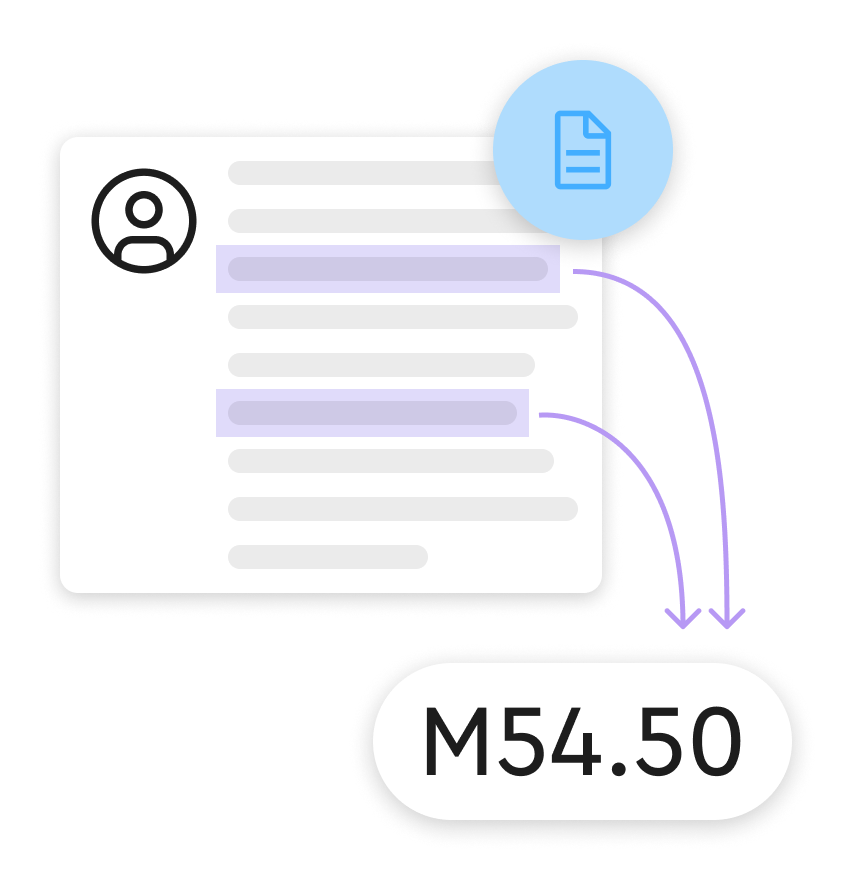
Generic EHR software forces you to search for codes yourself, resulting in endless clicks that add up. ModMed® built EMA EHR differently. The system captures structured data and uses specialty knowledge to automatically suggest ICD-10 codes based on your exam notes. And because our team manages the code mapping behind the scenes, you won’t skip a beat when ICD-11 drops. You just keep documenting, and EMA will suggest the most up-to-date codes for your approval.
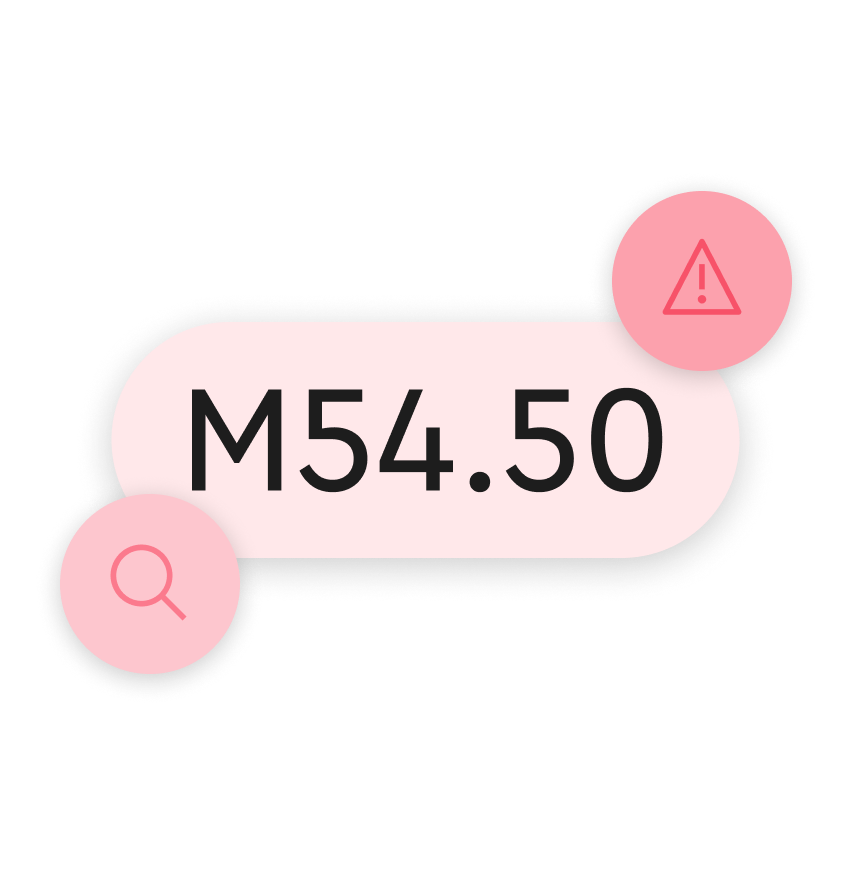
The real cost of ICD-10 coding errors
The volume of ICD-10 codes demands precision. When your coding isn’t exact, it doesn’t just trigger a claim denial — it can trap the revenue your practice has already worked for. Suddenly, your billing staff is forced to play investigator, digging through past exam notes to find a missing modifier or laterality detail while on hold with insurance payers. This back-and-forth cycle can stall your cash flow and cause administrative headaches. It’s not just a billing problem; it’s a massive drain on your resources.
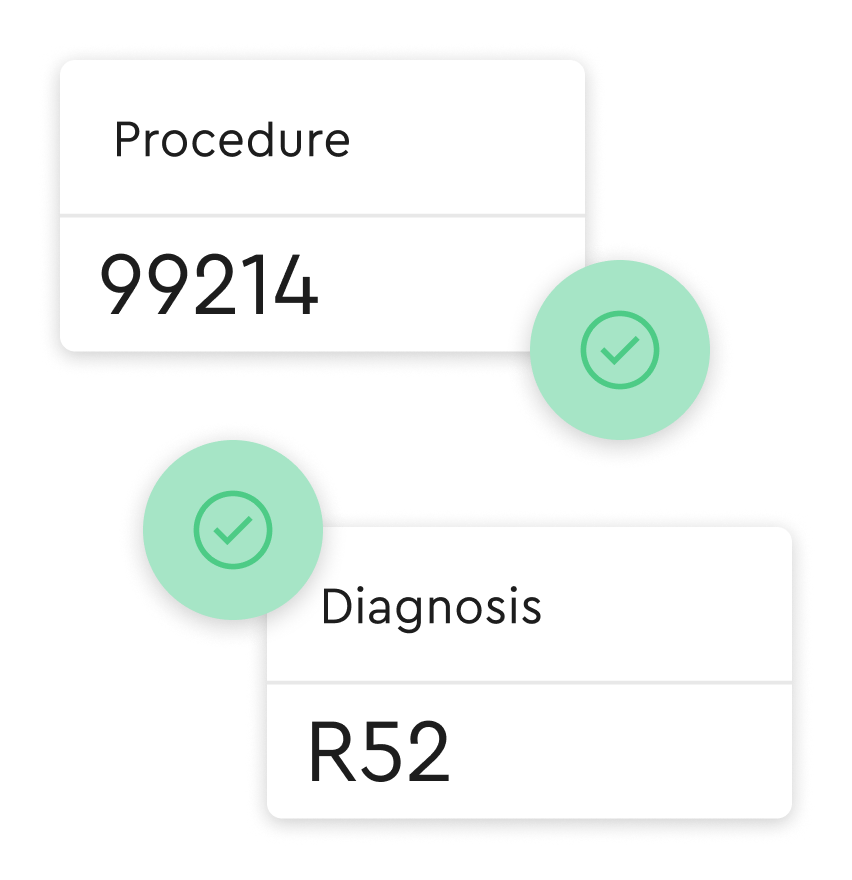
Built-in ICD-10 coding vs. crosswalks and translation tools
Bolted-on translation tools and general equivalence mappings (GEMs) — often referred to as “crosswalks” — act like a bad game of telephone, guessing at the billing code after the fact. EMA doesn’t guess. Because the suggestions are based on your clinical data points, it bypasses the need for clunky translators. Your documentation in the exam room naturally informs the highly specific billing codes presented for your final review.

CMS compliance deadlines and what they mean for your practice
Today, claims submitted with inaccurate or unspecified codes face immediate denial or future audit. If you’re relying on legacy translation tools to keep up with compliance requirements, you might expose your practice to unnecessary workflow bottlenecks and financial risk.
Memorizing ICD-10 codes isn’t a strategy
You likely memorized your favorite ICD-9 legacy codes because they were short and simple. ICD-10 is a different beast. In 2026, 487 new ICD-10 codes were added, bringing the total to 74,719. Trying to memorize tens of thousands of codes is like trying to memorize the dictionary. You have enough on your plate treating patients. Let your EHR surface the right suggestions.

Built-in ICD-10 software can help reduce coding errors
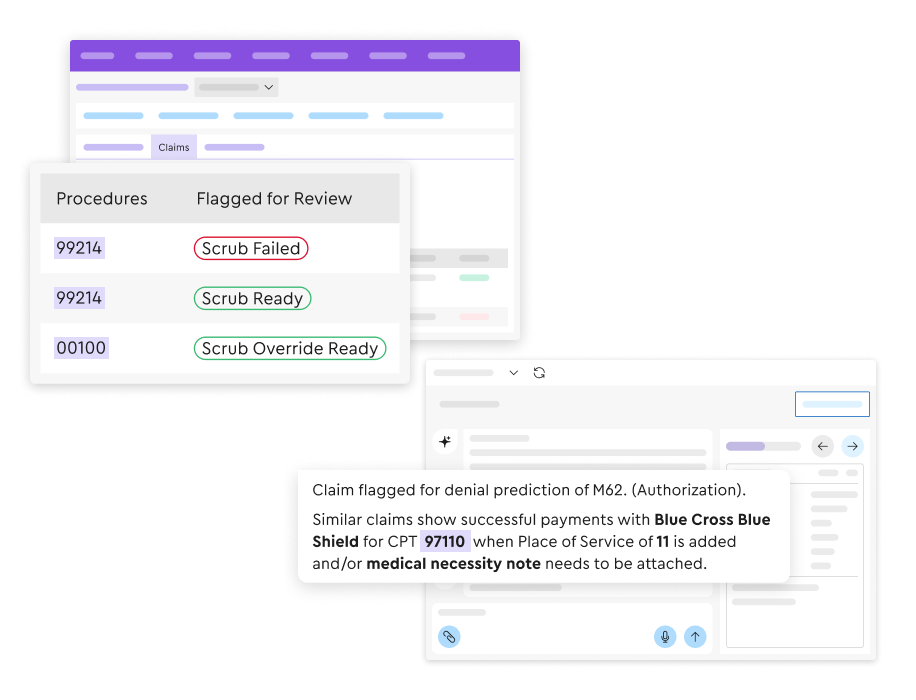
You help minimize human error when you eliminate manual code searches. Because EMA’s structured data proposes codes that align with your documented exam findings, it helps support coding accuracy. For example, unspecified diagnosis codes are highlighted in yellow to alert you that there are more specific options available, and any attempts to use an invalid ICD-10 code will prevent you from finalizing the visit until it’s been corrected. This proactive approach can help reduce claim denials before the patient even leaves the office, giving you more control over your day.
ICD-10 coding for specialty practices
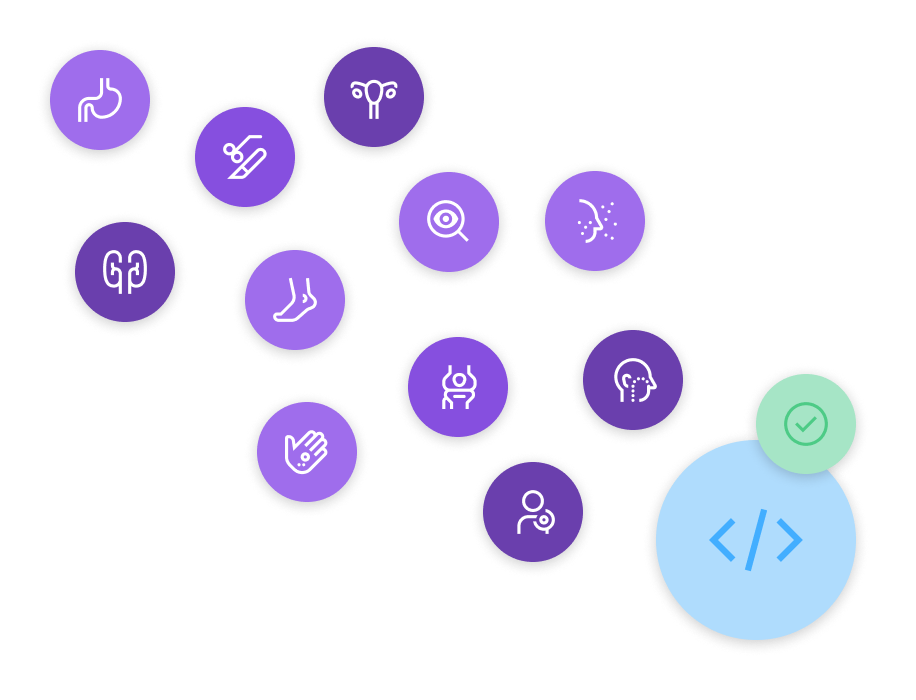
We know that an ophthalmologist doesn’t document like a dermatologist. That’s why EMA tailors its ICD-10 suggestions to your specialty — whether you practice dermatology, orthopedics, ophthalmology, OBGYN, podiatry, or plastic surgery. The system adapts to your clinical flow. Explore how our specialty-specific EHR software supports your day-to-day.
ModMed’s EMA EHR connects ICD-10 coding to your revenue cycle
A healthy bottom line requires accurate coding. Once you review and approve the suggested codes in EMA, that structured data flows seamlessly into our practice management software and revenue cycle management (RCM) services. No double data entry. No lost superbills. Just a fluid connection from the exam room to your billing department to help identify revenue gaps and support your financial outcomes.
Success stories
Make sure you don’t get lost in translation. Choose a specialty-specific, cloud-based healthcare suite designed to suggest codes, minimize disruption, and mitigate the risk of human error. Hear from our clients how choosing EMA has helped make their workflows seamless.

I used to joke about ‘death by a thousand clicks’ with our prior systems. Now, with the ModMed EHR single-screen workflow on the iPad, I can complete documentation in minutes, enabling timely notes, faster billing, and quicker payments. Gaining weeks of time at the click of a button is invaluable.
Hector Lopez, MD
Sports Medicine Associates of San Antonio

EMA has streamlined patient chart completion in the office and operating room to allow for thorough documentation while saving time.
Jeffery Walding, MD, FACS
Southern Institute of Plastic Surgery
Frequently asked questions about ICD-10 medical coding
What kind of software is used in diagnosis coding?
Diagnosis coding software generally falls into two camps: Bolt-on translation tools and EHR-integrated platforms. We built EMA as an integrated solution. It doesn’t translate old codes; it natively suggests ICD-10 codes based on your specific clinical documentation. This is key, since chart documentation must support all billed codes.
How do you evaluate ICD-10 coding software for a specialty practice?
Look under the hood. You want a built-in architecture, not a bolted-on afterthought. Prioritize systems that use structured data over clunky crosswalk translations. Ensure the platform features specialty-specific code libraries, deep integration with your billing and RCM tools, and an interface that doesn’t feel like a bloated spreadsheet.
What are common ICD-10 coding mistakes, and how can billing specialists prevent them?
Frequent errors include coding signs and symptoms when a definitive diagnosis is present, relying on unspecified codes, laterality mistakes, and mismatched diagnosis-to-procedure pairings. A built-in system helps you catch these issues early by flagging potential mismatches and surfacing the highest level of specificity based on the doctor’s notes.
How long does it take to learn ICD-10?
If you’re trying to memorize an ever-expanding list of codes, you’ll be studying for years. Why waste time memorizing codes when your EHR can surface relevant suggestions as you document? With an adaptive EHR system, you don’t have to learn a new language — you can focus on the patient.

Discover why EMA was born ready for ICD-11
More than a set of diagnostic codes, ICD-11 also provides “extension codes” that include information such as verification status, admission status, anatomical location, and severity. As AI technology evolves, it may support more automated coding, natural language processing, and data analytics, potentially bridging gaps between multiple code systems.
When will the United States begin transitioning to ICD-11? While 132 countries are transitioning to ICD-11, the process is gradual and could take years. Remember that the WHO endorsed ICD-10 in May 1990 with initial implementation January 1, 1993, in many countries, but the United States did not implement ICD-10 until October 1, 2015. With no required transition timeline, this too will likely take time, just like ICD-10.
You can find more information on ICD-11 here.
Discover all the ways that EMA is born ready for ICD-10!
Fill out the form to request a personalized demo
Discover all the ways that EMA is born ready for ICD-10!
Fill out the form to request a personalized demo