



Datos estructurados del mundo real para impulsar la investigación en ciencias de la vida y la investigación de resultados
Eliminar el retraso entre los datos y su análisis
Datos clínicos sin depurar
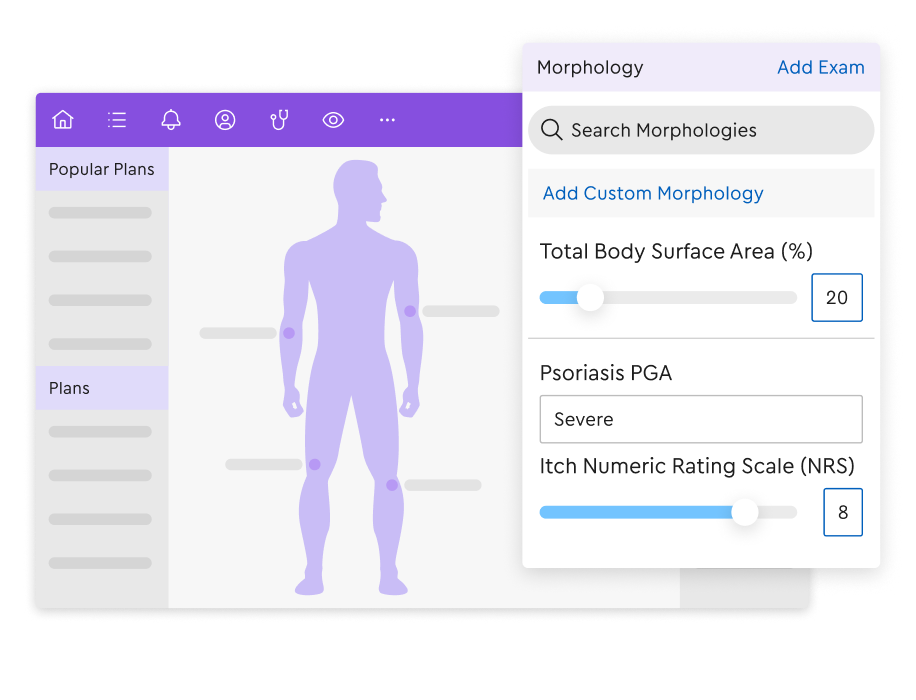
La investigación de vanguardia no debería verse frenada por tener que dedicar meses a desentrañar notas clínicas en formato de texto libre antes de poder realizar una consulta. Las soluciones de datos del mundo real (RWD) de ModMed® ofrecen conjuntos de datos anonimizados y tokenizados listos para su uso. Como capturamos cada detalle concreto como datos estructurados directamente en la consulta, no hay que descifrar textos narrativos confusos.
Tanto si estás generando evidencia del mundo real, llevando a cabo investigaciones sobre resultados o realizando análisis en el ámbito de las ciencias de la vida, ModMed te ofrece conjuntos de datos bien organizados para que puedas dejar de limpiar datos y pasar directamente a obtener información útil.
La ventaja de los datos de ModMed RWD Solutions

Estructurados y anonimizados
Olvídate de las narrativas desordenadas y poco estructuradas gracias a unos datos preparados para la modelización clínica y operativa. ModMed proporciona a tus investigadores datos anonimizados y altamente estructurados, recopilados directamente en el punto de atención.

Específicos para cada especialidad y detallados
Impulsa tus investigaciones más complejas con conjuntos de datos específicos para cada especialidad, recopilados a un nivel muy detallado. Con ellos, dispondrás de las variables necesarias para analizar poblaciones con enfermedades raras y comunes, realizar un seguimiento de los resultados y medir el uso de los productos en la vida real.

Longitudinal y tokenizado
Recopile datos fiables del mundo real realizando un seguimiento de los pacientes a lo largo de varias visitas. La continuidad longitudinal tokenizada permite a los investigadores ver el contexto completo, medir la verdadera evolución clínica, realizar un seguimiento de las decisiones operativas a lo largo del tiempo y evaluar con precisión los resultados a largo plazo de los pacientes.
Datos del mundo real para lograr un impacto en el mundo real
Ayude a acelerar los ensayos clínicos, agilizar los trámites reglamentarios y mejorar los resultados de los pacientes gracias a nuestros conjuntos de datos específicos para cada especialidad y preparados para el análisis.
Fabricantes de productos farmacéuticos
Biofarmacéutica emergente
Tecnología médica y diagnóstico
Gobierno y salud pública
Sistemas sanitarios e investigación académica
Investigación sobre economía de la salud y resultados clínicos (HEOR)
Ayúdanos a demostrar el valor clínico y económico a largo plazo de un tratamiento —algo esencial para las negociaciones sobre precios y reembolsos— utilizando datos estructurados sobre los resultados obtenidos en más de mil millones de consultas médicas.
Evidencia del mundo real (RWE)
Realizar un seguimiento del rendimiento y la seguridad a largo plazo de los medicamentos tras su autorización a partir de los resultados estructurados de las historias clínicas electrónicas (HCE). Estos datos del mundo real (RWE) pueden ayudar a cumplir los requisitos normativos y a conseguir con éxito ampliaciones de la indicación.
Rendimiento de la competencia
Analizar datos del mundo real para demostrar una eficacia superior frente a los tratamientos de referencia actuales.

Relaciones con los inversores y valoración
Elaborar estimaciones del tamaño de la población de pacientes basadas en datos contrastados para reforzar los argumentos de captación de fondos y la confianza del consejo de administración antes de las rondas de financiación clave.
Desarrollo clínico y viabilidad
Evaluar la viabilidad del ensayo y determinar la concentración de pacientes objetivo en las distintas indicaciones especializadas.
Planificación del lanzamiento comercial
Planificar la estrategia de lanzamiento al mercado utilizando datos sobre la concentración de prescriptores antes de desarrollar la infraestructura comercial.

Presentación de documentos reglamentarios y vigilancia
Apoyar la generación de datos de experiencia real (RWE) destinados a fundamentar las solicitudes de autorización de productos sanitarios y a contribuir al seguimiento de la seguridad tras la comercialización, de conformidad con las directrices de la FDA.
Acceso al mercado y reembolso
Recopilar datos sobre resultados clínicos y uso de los servicios para respaldar la codificación CPT, las decisiones sobre cobertura y las negociaciones de contratos con las entidades pagadoras.
Seguimiento comercial y de trámites
Realizar un seguimiento de las curvas de adopción y los volúmenes de procedimientos a lo largo del tiempo en los distintos entornos de atención médica especializada.

Revisión normativa y apoyo a las políticas
Utilizar los resultados clínicos reales de las especialidades para fundamentar las evaluaciones normativas y las decisiones sobre cobertura a nivel nacional y local.
Equidad sanitaria y vigilancia pública
Realizar un seguimiento de las tendencias de las enfermedades crónicas específicas y de las desigualdades en el acceso a la asistencia sanitaria en los distintos subgrupos demográficos y geográficos.
Control de seguridad
Proporcionar a las agencias la capacidad de utilizar datos del mundo real para la vigilancia de la seguridad tras la comercialización, realizar un seguimiento de los efectos adversos y contribuir al proceso de autorización de nuevos tratamientos.

Mejora de la calidad clínica
Utilizar datos sobre resultados en la vida real para diseñar intervenciones en materia de salud de la población y coordinación asistencial dirigidas a grupos de pacientes con enfermedades específicas.
Investigación
Realizar estudios observacionales retrospectivos e investigaciones sobre la carga de morbilidad utilizando datos estructurados de historias clínicas electrónicas (HCE) especializadas, más allá de las poblaciones de los ensayos controlados.
Mejora del acceso y la prestación de servicios
Utilizar datos del mundo real (RWD) listos para la investigación con el fin de impulsar la eficiencia operativa y mejorar la participación de los pacientes, la calidad de la atención y los resultados sanitarios generales.

Fabricantes de productos farmacéuticos
Investigación sobre economía de la salud y resultados clínicos (HEOR)
Ayúdanos a demostrar el valor clínico y económico a largo plazo de un tratamiento —algo esencial para las negociaciones sobre precios y reembolsos— utilizando datos estructurados sobre los resultados obtenidos en más de mil millones de consultas médicas.
Evidencia del mundo real (RWE)
Realizar un seguimiento del rendimiento y la seguridad a largo plazo de los medicamentos tras su autorización a partir de los resultados estructurados de las historias clínicas electrónicas (HCE). Estos datos del mundo real (RWE) pueden ayudar a cumplir los requisitos normativos y a conseguir con éxito ampliaciones de la indicación.
Rendimiento de la competencia
Analizar datos del mundo real para demostrar una eficacia superior frente a los tratamientos de referencia actuales.
Biofarmacéutica emergente
Relaciones con los inversores y valoración
Elaborar estimaciones del tamaño de la población de pacientes basadas en datos contrastados para reforzar los argumentos de captación de fondos y la confianza del consejo de administración antes de las rondas de financiación clave.
Desarrollo clínico y viabilidad
Evaluar la viabilidad del ensayo y determinar la concentración de pacientes objetivo en las distintas indicaciones especializadas.
Planificación del lanzamiento comercial
Planificar la estrategia de lanzamiento al mercado utilizando datos sobre la concentración de prescriptores antes de desarrollar la infraestructura comercial.
Tecnología médica y diagnóstico
Presentación de documentos reglamentarios y vigilancia
Apoyar la generación de datos de experiencia real (RWE) destinados a fundamentar las solicitudes de autorización de productos sanitarios y a contribuir al seguimiento de la seguridad tras la comercialización, de conformidad con las directrices de la FDA.
Acceso al mercado y reembolso
Recopilar datos sobre resultados clínicos y uso de los servicios para respaldar la codificación CPT, las decisiones sobre cobertura y las negociaciones de contratos con las entidades pagadoras.
Seguimiento comercial y de trámites
Realizar un seguimiento de las curvas de adopción y los volúmenes de procedimientos a lo largo del tiempo en los distintos entornos de atención médica especializada.
Gobierno y salud pública
Revisión normativa y apoyo a las políticas
Utilizar los resultados clínicos reales de las especialidades para fundamentar las evaluaciones normativas y las decisiones sobre cobertura a nivel nacional y local.
Equidad sanitaria y vigilancia pública
Realizar un seguimiento de las tendencias de las enfermedades crónicas específicas y de las desigualdades en el acceso a la asistencia sanitaria en los distintos subgrupos demográficos y geográficos.
Control de seguridad
Proporcionar a las agencias la capacidad de utilizar datos del mundo real para la vigilancia de la seguridad tras la comercialización, realizar un seguimiento de los efectos adversos y contribuir al proceso de autorización de nuevos tratamientos.
Sistemas sanitarios e investigación académica
Mejora de la calidad clínica
Utilizar datos sobre resultados en la vida real para diseñar intervenciones en materia de salud de la población y coordinación asistencial dirigidas a grupos de pacientes con enfermedades específicas.
Investigación
Realizar estudios observacionales retrospectivos e investigaciones sobre la carga de morbilidad utilizando datos estructurados de historias clínicas electrónicas (HCE) especializadas, más allá de las poblaciones de los ensayos controlados.
Mejora del acceso y la prestación de servicios
Utilizar datos del mundo real (RWD) listos para la investigación con el fin de impulsar la eficiencia operativa y mejorar la participación de los pacientes, la calidad de la atención y los resultados sanitarios generales.
Sólida representación especializada a nivel nacional
ModMed cuenta con una amplia base de datos en las especialidades de dermatología y oftalmología, con una red en constante crecimiento que sigue ampliándose. Nuestros datos, recopilados de forma detallada en campos estructurados dentro de nuestro galardonadoEHR1 y presentados en un formato listo para su análisis, sirven de apoyo a las organizaciones del sector de las ciencias de la vida que trabajan en el ámbito de la evidencia del mundo real (RWE), la investigación en economía de la salud y resultados clínicos (HEOR), y otros ámbitos.
Dermatología
Oftalmología
Las soluciones RWD de ModMed ofrecen una amplia variedad de datos sobre dermatología2, tales como:
| Enfermedad | Número estimado de pacientes | Principales indicadores de resultados |
|---|---|---|
| Psoriasis | 4.5M | Ubicación, PGA, BSA, Itch-NRS, PASI |
| Dermatitis atópica | 5.9M | Localización, valoración general, BSA, índice de picor, EASI |
| Hidradinitis supurativa | 750K | Ubicación: escenario Hurley |
| Alopecia areata | 820K | Localización, puntuación de gravedad |
| Melanoma | 1.1M | Localización, estadio, diámetro de la lesión |
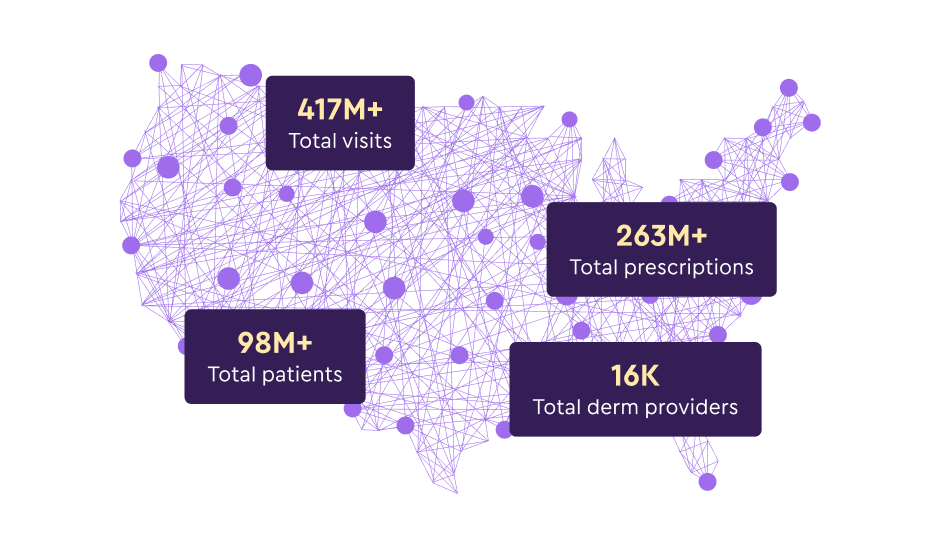
Dermatología
Amplia información procedente de nuestra red de:
- Más de 98 millones de pacientes
- Más de 481 millones de encuentros
Las soluciones ModMed RWD proporcionan amplios datos de oftalmología2, tales como:
| Enfermedad | Número estimado de pacientes | Principales indicadores de resultados |
|---|---|---|
| Ojo seco | 5.8M | Prueba de Schirmer, tiempo de ruptura de la película lagrimal, osmolaridad de la película lagrimal |
| Glaucoma | 1.7M | Agudeza visual, prueba del campo visual, presión intraocular |
| DMAE seca | 1.2M | Agudeza visual, presión intraocular |
| DMAE húmeda | 340K | Agudeza visual, presión intraocular |
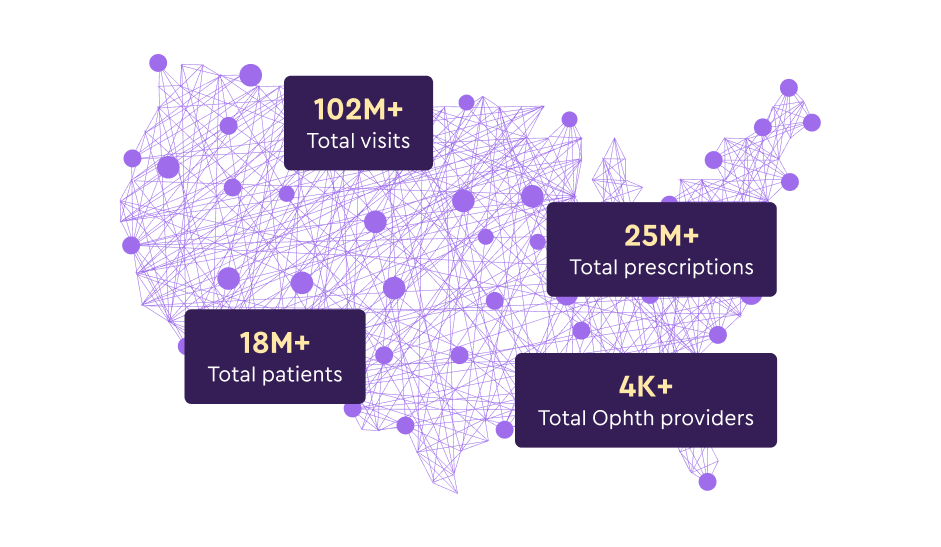
Oftalmología
Amplia información procedente de nuestra red de:
- Más de 18 millones de pacientes
- Más de 102 millones de encuentros
Descubre las soluciones RWD de ModMed

Descubre ModMed
#1 EHR
La historia clínica electrónica (EHR) de dermatología número 1 durante 13 años consecutivos1
El EHR de oftalmología número 1 durante 10 años consecutivos1
~1B
Consultas de pacientes en 11 especialidades
Equipo tecnológico del año
Premios Stevie American Business Awards 2025 (Plata)
Preguntas frecuentes
¿Qué son los datos clínicos anonimizados?
Los datos clínicos anonimizados son información sobre la salud de los pacientes a la que se le han eliminado los identificadores directos con el fin de proteger la privacidad. En el ámbito de la investigación, permiten a las organizaciones analizar tratamientos, resultados y patrones de enfermedades sin revelar información que permita identificar personalmente a los pacientes.
¿Cómo se recopilan los datos del mundo real a partir de los sistemas de historias clínicas electrónicas?
Los datos del mundo real procedentes de los sistemas de historias clínicas electrónicas (HCE) se recogen durante la atención rutinaria al paciente y se registran en campos clínicos como el diagnóstico, la localización corporal, la gravedad de la enfermedad, el historial de tratamiento y los indicadores de resultados. Los datos estructurados y anonimizados de las HCE resultan especialmente útiles, ya que son más coherentes y están listos para su análisis.
¿Qué son los datos estructurados de las historias clínicas electrónicas y por qué son importantes para la investigación?
Los datos estructurados de la historia clínica electrónica (HCE) son información registrada en campos estandarizados, introducida directamente a partir de las respuestas del especialista a una serie de preguntas, en lugar de texto narrativo no estructurado. Son importantes para la investigación porque mejoran la coherencia del contenido de los datos introducidos por el especialista, facilitan un análisis más rápido y permiten evaluar más fácilmente los resultados de los pacientes, los patrones de tratamiento y la evolución de la enfermedad a gran escala.
¿Cómo pueden los datos de pacientes anonimizados y tokenizados contribuir a los estudios basados en evidencia del mundo real?
Los datos de pacientes anonimizados y tokenizados pueden servir de base para estudios de evidencia del mundo real, ya que permiten a los investigadores analizar los resultados al tiempo que contribuyen a proteger la privacidad. La tokenización también puede facilitar la vinculación a nivel de paciente entre conjuntos de datos dispares para garantizar el cumplimiento de la HIPAA, lo que permite obtener una visión más amplia de la trayectoria de los pacientes, el uso de los tratamientos y los resultados a largo plazo.
¿Qué tipos de indicadores de resultados pueden incluir los datos del mundo real específicos de cada especialidad?
Los datos del mundo real específicos de cada especialidad pueden incluir medidas de resultado como las puntuaciones de gravedad de la enfermedad, la localización corporal, la agudeza visual, la presión intraocular, las características de las lesiones, los índices de síntomas y la evolución a lo largo del tiempo. Estas medidas estructuradas ayudan a los investigadores a evaluar la carga de la enfermedad, la respuesta al tratamiento y los resultados clínicos.
¿Por qué utilizan los equipos del ámbito de las ciencias de la vida conjuntos de datos clínicos específicos de cada especialidad?
Los equipos del ámbito de las ciencias de la vida utilizan conjuntos de datos clínicos específicos de cada especialidad, ya que estos proporcionan un contexto clínico más detallado que muchas fuentes generalizadas. Estos conjuntos de datos pueden ofrecer indicadores relevantes para la enfermedad, información sobre los tratamientos y detalles sobre los resultados que mejoran el diseño de los estudios, la generación de evidencia y el análisis de las áreas terapéuticas.
¿Cuál es la diferencia entre los datos del mundo real y la evidencia del mundo real?
Los datos del mundo real son la información sanitaria recopilada durante la atención sanitaria habitual, procedente de historias clínicas electrónicas, reclamaciones o datos sobre resultados. La evidencia del mundo real es el conocimiento clínico o científico que se obtiene al analizar los datos del mundo real para responder a preguntas sobre el uso de los tratamientos, su seguridad, su eficacia o los resultados de los pacientes.
La envergadura y el nivel de detalle de las soluciones de datos del mundo real de ModMed contribuyen a generar evidencia del mundo real más precisa para los investigadores del ámbito de las ciencias de la vida.
¿Qué deben tener en cuenta los investigadores a la hora de elegir un proveedor de datos del mundo real?
Los investigadores deben tener en cuenta la calidad de los datos, la estructura de los campos, la pertinencia para su especialidad, las medidas de protección de la privacidad, las capacidades de tokenización, la cobertura geográfica y la profundidad de los resultados. Un buen proveedor de datos del mundo real también debe ofrecer conjuntos de datos listos para su análisis que se ajusten a la pregunta de investigación y al diseño del estudio previstos.

Ponte en contacto con nosotros para empezar
Rick Catino
Vicepresidenta de Datos del Mundo Real,
ModMed
1 Black Book™ 2026
2 Los datos que se muestran son estimaciones basadas en muestras. El número de pacientes puede variar en función de los parámetros y condiciones de inclusión.