




AI clinical documentation & workflow automation
The best clinical AI understands the nuances of your medical specialty
Medicine is built on human connections, not checkboxes. You know it, and so do the ModMed® specialty physicians who built our clinical AI. As part of the AI-Powered Practice™, our clinical AI understands your terminology, mirrors your specialty’s nuances, and embeds directly into your workflows to surface relevant clinical context before, during, and after the visit – so you can stay focused on your patients.
Make every stage of care a little easier with clinical AI
A patient’s journey extends far beyond the exam room. Our clinical AI can help your team move through each transition with less friction and fewer manual steps.
Before the visit:
Prep without the paperwork
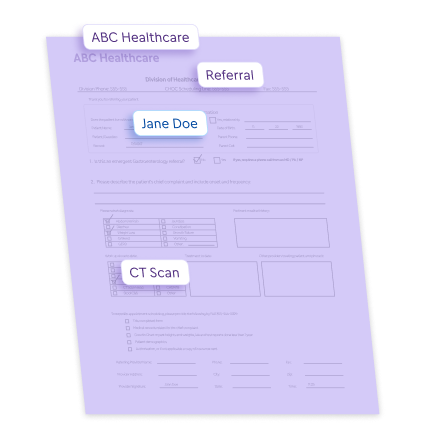
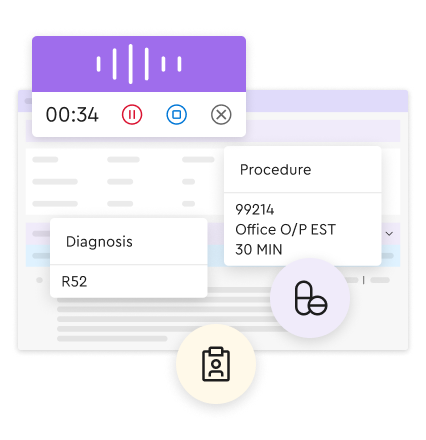
Incoming documents and faxes are classified, and essential patient and provider details are extracted and populated into your EHR for review. This helps get the right documents to the right person, at the right time.
During the visit:
Hands-free documentation
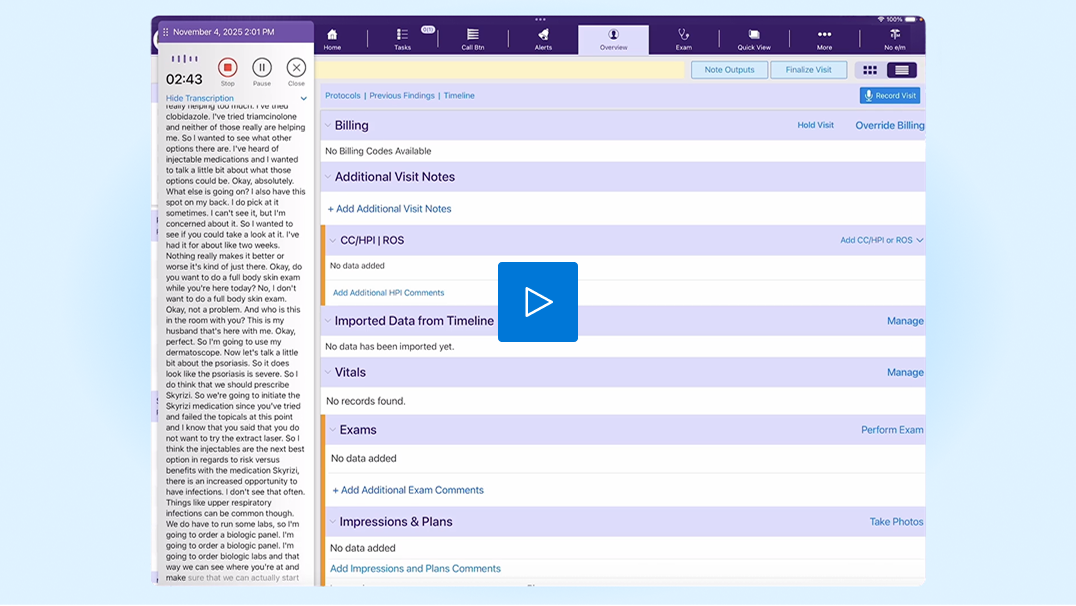
You talk to your patient. ModMed Scribe listens and translates your exam room conversations into structured, comprehensive clinical notes for your review, including the billing codes, prescriptions, and labs.
After the visit:
Effortless follow-ups
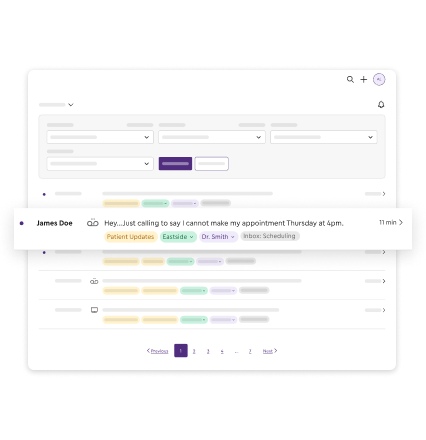
Patient texts and voicemails convert into clear notes and route directly to the clinical staff member best suited to help. Clinicians receive a summary of lab, imaging, and pathology results, making it easier to spot the next step.
AI trained on real, de-identified data
An AI model is only as smart as the data behind it. That is why ModMed AI isn’t trained on internet text or generic datasets. Instead, we built our foundation using:
patient encounters
prescriptions and lab orders
diagnoses and treatment plans
years of clinical experience
Supporting you in the exam room and beyond
ModMed Scribe is the first of multiple clinical AI tools from ModMed, all designed to help your team work more efficiently and stay focused on care. ModMed Scribe is available today, and we’re already building the next set of clinical AI products for your AI-Powered Practice.
ModMed Scribe 2.0
Turns natural conversation into clinical action.
- Listens like a human; documents like a scribe
- Speeds up the staff onboarding
- Queues up downstream tasks for your approval
Coming soon
The next wave of clinical AI
Documentation reconciliation
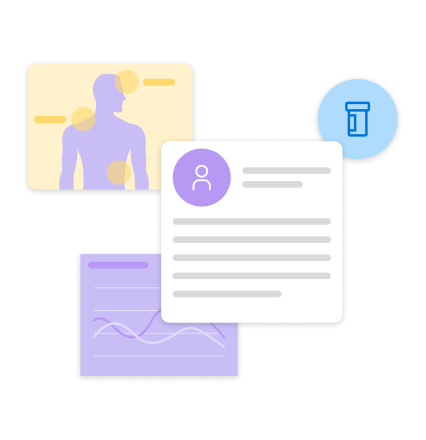
Our AI scribes will merge existing chart documentation with incoming AI-generated notes, designed to cut your editing time and keep you focused on what matters most.
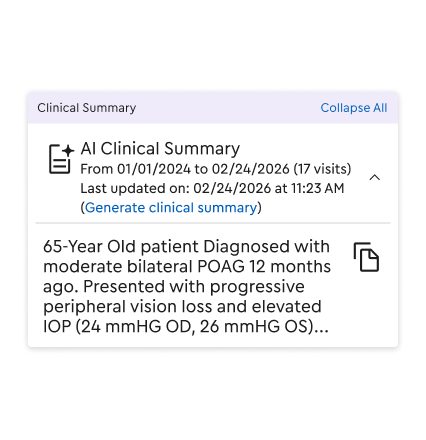
Pre-visit patient summaries
A simple, at-a-glance patient brief before you enter the room, our new AI tool features a pre-visit clinical review to provide you with the right information at the right moment.
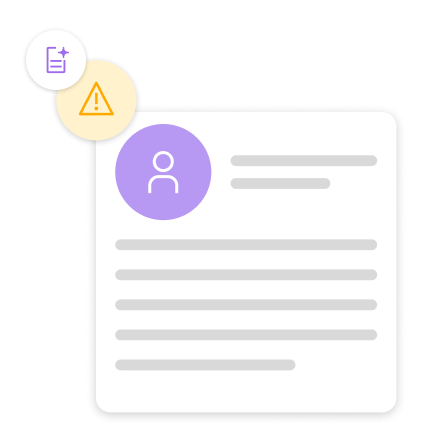
Electronic Prior Authorization
When our AI spots a likely prior authorization need during an exam, the system automatically queues the follow-up tasks for your approval – a big improvement over computerized provider order entry (CPOE).


Using ModMed Scribe has reduced my documentation time by 50%, and I love how efficient and thorough my notes are.
Madeleine Prieto, PA-C
Wellington, FL

The summaries of HPI and plans of care are excellent, and it has freed up my mental energy to focus more on the patient.
Benjamin Wycherly, MD
Farmington, CT

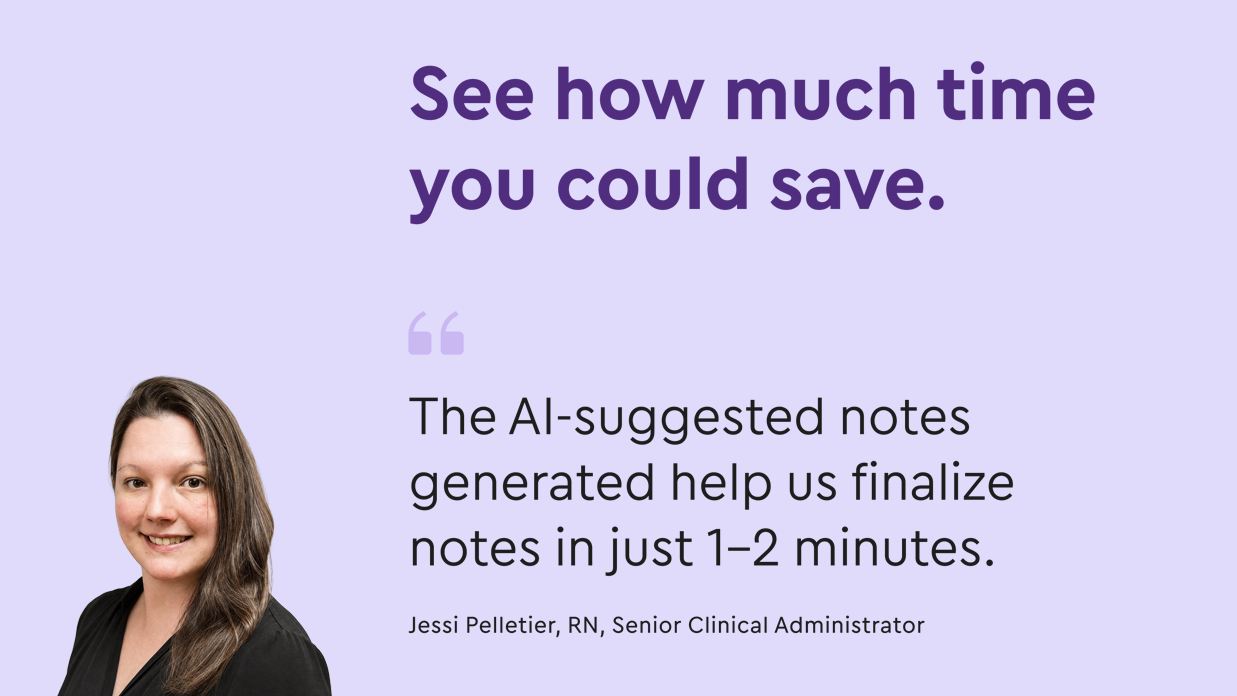
ModMed Scribe drives significant time savings, reducing the volume of my after-hours charting by an average of 80% and saving me several hours a week on documentation.
Benjamin Klug, MD
North Platte, NE
Less time charting. More time caring.
See how your peers are using ModMed Scribe to help eliminate downstream administrative drag and free up their time to spend with patients.

Dr. Tory Sullivan
Fort Lauderdale & Miami, FL

Dr. Lesley Loss
Rochester, NY

Dr. Kathy Lee
Laguna Hills, CA
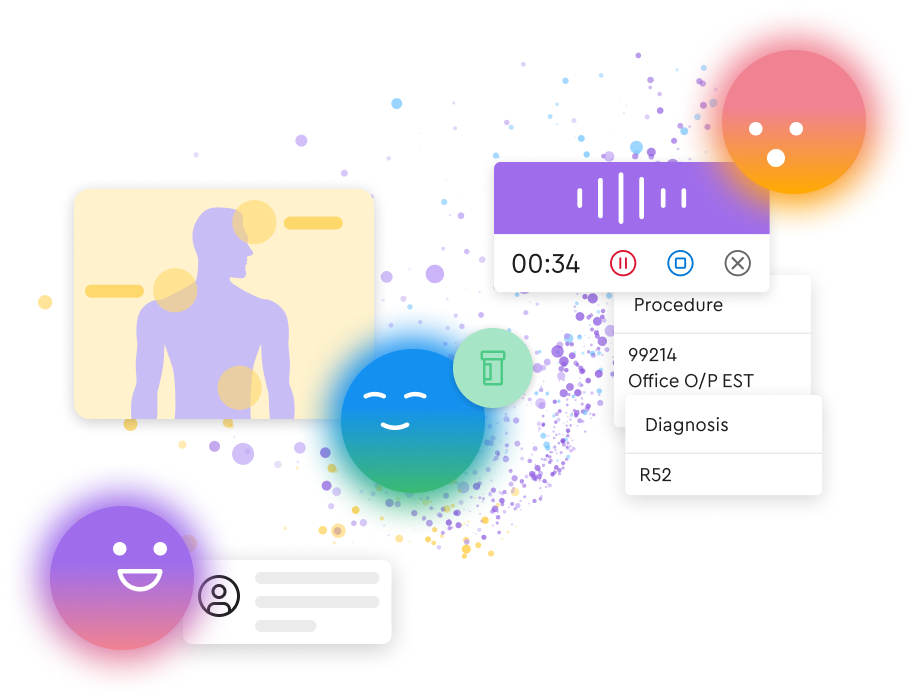
Turn your practice into an AI-Powered Practice
More than a suite of products — the AI-Powered Practice is a new foundation for specialty care. By embedding specialty-focused AI Assistants across the entire practice, ModMed seeks to eliminate administrative friction, accelerate performance, and lower the cost of care while keeping humans firmly in control. The result is a smarter, more efficient, and more connected end-to-end experience for providers, staff, and patients alike — built not just to keep up with healthcare’s future, but to define it.
Take your first step in building your AI-Powered Practice by unlocking access to our industry-leading¹ platform that includes EHR, practice management, and patient engagement, all complemented by ModMed RCM Services.
When it comes to efficiency, the difference is clear
| Clinical AI in the AI-Powered Practice | Typical Practice |
|---|---|
Cuts charting time by 50%² | Loses time with extra steps |
Suggests notes, codes, and clinical actions | Transcribes patient conversations and stops |
Integrates AI natively into the EHR | Forces you to switch systems and causes data entry errors |
Knows your specialty's vocabulary and nuances | Creates errors due to niche specialty terms |
Surfaces specialty-relevant insights in concise pre-visit summaries | Generates cluttered, one-size-fits-all summaries that bury key details |
Extracts and populates details from incoming faxes into the EHR for review | Attaches digitized faxes, leaving staff to transcribe the data |
Built for the way you practice
Our clinical AI is designed for your specialty — understanding the terminology, clinical context, and workflows that shape how you document and treat patients. Explore our specialty-specific solutions.
Allergy
Dermatology
ENT
Gastroenterology
OBGYN
Ophthalmology
Orthopedics
Pain Management
Plastic Surgery
Podiatry
Urology
FAQs
What is clinical AI?
Clinical AI is the application of machine learning, natural language processing (NLP), and ambient intelligence within healthcare software to assist medical providers with clinical and administrative workflows. These solutions are aimed at reducing the clinical and operational burden by highlighting information that is clinically relevant for the provider to make the best decision for the patient.
Operating strictly under a human-in-the-loop framework, clinical AI does not make medical decisions, diagnose patients, or prescribe treatments. Instead, it processes data to act as an assistant, supporting the provider’s ultimate clinical judgment.
What’s special about ModMed’s approach to clinical AI?
ModMed’s clinical AI is purpose-built by specialty physicians and trained on ModMed’s deep repository of de-identified, real-world, specialty-specific clinical data. To build it all, on-staff specialty physicians develop and test our clinical AI on rigorous standards through a speciality lens. Each clinical AI is Individually launched to each unique specialty to vet value, need, and efficacy – delivering clinical AI that understands your unique terminology, mirrors your specialty’s nuances, and embeds directly into your workflows.
Will my patient conversations be used to train the AI inside ModMed Scribe?
Once recordings are processed and transcripts are created, the recordings are deleted. The original transcripts will be retained by ModMed for up to 90 days before the content is de-identified and the transcript is no longer linked to the patient or practice.
How often is ModMed Scribe updated with new medical knowledge?
While the system operates on a centralized knowledge base that is periodically updated to reflect changes in medical standards, its strength lies in its specialty-specific training and high-volume data integration.
ModMed Scribe 2.0 was trained on de-identified, real-world clinical data, including millions of structured parameters sampled from over 1 billion patient encounters, 2 billion diagnoses, 4 billion care plans, 500 million prescriptions, and 400 million lab orders. Unlike generic AI models, ModMed Scribe was trained on specialty-specific synonym libraries developed by practicing physicians. This grounding helps the AI scribe understand the terminology, nuances, and workflows of your field.
Since the launch of ModMed Scribe 2.0 in November 2025, the clinical AI assistant has supported over 1,000,000 patient visits and has been adopted by more than 1,800 providers.
What safeguards are in place to prevent hallucinations or errors in ModMed Scribe?
We designed ModMed Scribe to be accurate and reliable. We are taking several steps to measure ModMed Scribe’s performance and will continue to monitor performance on an ongoing basis, including through internal testing, a state-of-the-art third-party monitoring tool, and an impact survey of our users. Plus, providers always have the final say with built-in review and editing features.
How is ModMed Scribe validated for clinical use?
ModMed Scribe 2.0 is built natively into ModMed’s EHR EMA® and trained on data from a large, specialty-specific dataset — including over 750 million patient encounters, 2 billion diagnoses, and 4 billion care plans. Co-created by physicians, ModMed Scribe is built to understand the clinical nuances of specialty medicine — from retina exams to Mohs surgery.
Additionally, ModMed has received an ASTP/ONC certification related to ModMed Scribe. In 2024, the ASTP’s HTI-1 Final Rule laid out extensive transparency and risk-management requirements for predictive tools based on artificial intelligence. These rules were intended to ensure that Predictive DSIs are fair, appropriate, valid, effective, and safe for use within certified EHR technology. This is critical for providers who need to trust and have confidence in the tools and technology they bring into the exam room. This certification reflects ModMed’s commitment to these principles, which support healthcare providers in delivering exceptional patient care.
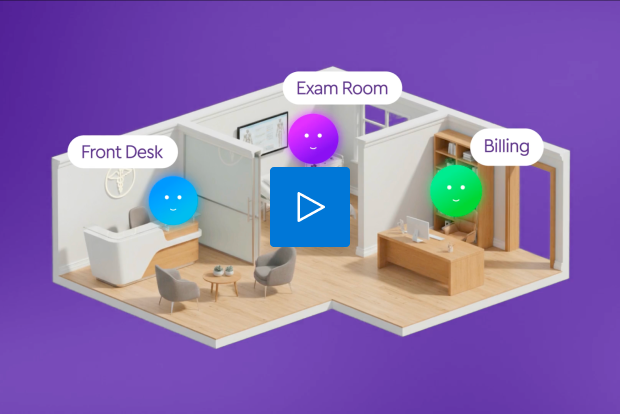
See ModMed Scribe in action
Fill out the form for a personalized consultation

Welcome Back
1 2026 Black Book™
2 Results may vary based on practice size, product usage, and other factors. The 50% reduction in charting is based on two ModMed Scribe users.
This page includes “forward-looking statements,” including information about solutions and features that are not yet available. The decision and timing regarding release and development of solutions and features may be subject to change. Actual solutions and features may differ materially from any of those expressed here or in other forward-looking statements. Any purchasing decisions made by you should be solely based on ModMed’s existing solutions and functionality.
Product images are for illustrative purposes only.